

 Posts


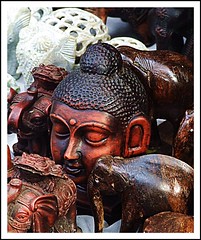


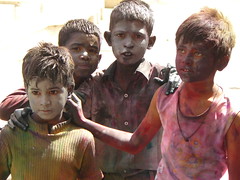

The Bharani Festival, which falls in the Malayalam month of Meenam (March/ April) attracts the largest congregation of 'Velichappadu' (Oracles), including women from different parts of the State.
Once in a trance, these Oracles perform a frenzied dance, repeatedly slashing their foreheads with curved swords. As a supreme symbol of their devotion, they make a sacrificial offering of their own blood to the deity.


an inmate of Old Age Home in Chandigarh watching families enjoying while himself sitting lonely in a wait for his family outside the Old Age Home.

shots from srayikadavu, malappuram dist, kerala

On one of the visits to Pondicherry, we stopped by the backwaters near Marakkanam. I was on top of the fort when I saw this beautiful scene appear.
This boatman was powering his boat through the water, and was kind of having fun with himself.
Luckily for me, I had a long telephoto lens attached to an extender. Being midday, it was perfect to execute a shot where the splashing water could be captured.
Photographed with a Canon EOS 5D Mark II, and Canon EF 70-200mm F2.8 IS USM L Lens with Canon EF 2X Extender. Handheld.


I watched this delightful couple's performance. Husband renders flok song melodiously and the lady breaks in to graceful dance at the appropriate time during their performance ! PLEASE VIEW LARGE

Early evening in the desert, and Sita is looking for brushwood for the fire. She lives in a Goatskin tent with her family, at the edge of the Thar, and night time can be terribly cold.
One member of the family stays awake throughout the night to tend to the fire, so the warmth will spread underneath the ground and keep all of her family warm.
However, the desert grows larger by the year, as more and more sources of wood and kindling disappear, consumed by drought or demand. Sita tells me finding fuel is her biggest worry.

... enjoying her smoke. This time it was tobacco. sometimes it is opium too. The pipe is silver. It is similar to the ones used in Myanmar, Thailand and Laos.


A peek into the everyday lives of the not-so-fortunate and the needy in India. Shown in this picture is a little Tea Stall in Noida, India, where Mukesh and his family sell tea and biscuits to office goers for a living.
The balancing act, as they say, can do wonders for your job!
11:21 AM
/
Posted by
Unknown
/
comments (0)

So, we (my younger bro and I) were curious to see this new kind of traffic on the highways of Hazaribag, India and we decided to spend one morning to study them more! They are porting Coal to the local dealers who then transfer the coal to the Fire Chambers making brick (called bhatti). These guys pack their sacks late in the evening and start early at 2am from a mine near Kujju. They have to pay taxes to Naxallites about 10% of their profit. Then, they have to pay 10 Rs per bora (sack) to the local police. It's called 'Lal Salaam'. In the end, they are able to make about 300 Rs a day riding this huge load for 40km one way!
Mind you, they can ride that bicycle most of the times!

Arjuna's Penance / Descent of the Gange - Mamallapuram (Mahabalipuram) - Tamil Nadu.
Labels: black and white, Mamallapuram, Tamil nadu, WOMAN
The Bihu dance is a folk dance from the Indian state of Assam related to the festival of Bihu. This joyous dance is performed by both young men and women, and is characterized by brisk dance steps, rapid hand movement, and a rhythmic swaying of the hips in order to represent youthful passion. Dancers wear traditionally colorful Assamese clothing.
The Bihu dance is performed in conjunction with traditional Bihu folk music, played with: the "dhol", similar to a drum; the mohor singor pepa, a pipe instrument made from a buffalo horn; the tala, a cymbal; the gogona, a reed and bamboo instrument; and the toka, a bamboo clapper. The songs (bihu geet) that accompany the dance have been handed down for many generations. The subject of the lyrics ranges from welcoming the Assamese new year to describing the daily life of a farmer.(source Wikipedia}

a horondouz sight from the famous river bharathapuzha .kerala is becoming a garbage of concreet mansions and skyscrapers, since people are exploiting all water sources for legal and illegal sand mining, which is one of the greatest threats to the eccology in kerala

It was a substantial wind storm and absolutely insane to be out with a camera. But also knowing some of the most dramatic situations often occurs only in impossible conditions, I went out on my Royal Enfield. I was not disappointed, in a no name hamlet outside of Bikaner I ran across this wedding processing where the groom is escorted to the brides home. He is obviously a very low class because for a Rajput the ideal way to meet the bride is on the back of a white stallion. (Rajastan)
Labels: children, rajastan, Rajput, sand storm, wedding
This shot is from a hospital sarai(dormitory) he is a bystander of a patient admitted in the hospital..................it seems he was cooking ...its too costly to buy food from hotels outside....the hospital allows bystanders of poor patients to stay in 2 halls free of cost.....they can cook their food there

Bohteyr (72) jinalaya Jain temple complex in Kutch - about 50 km from Bhuj, enroute to Mandvi. The octagonal main temple (pictured above) is surrounded by smaller shrines to various Jain deities. Hand-carved in marble, the fully constructed complex is open for visitors but carving of the marble is on-going. Begun in 1982, it will be a while before everything is carved.
Quite a unique opportunity to see marble carving in process rather than the usual finished temples. The craftsmen are from Rajasthan and they are quite proud of their craft and heritage, and very happy to be working on this temple. Preserving local crafts is a critical form of historic preservation because the enduring practice of indigenous trades preserves identity, patriotism, and local economy.

Taken from Ellis Bridge looking over a tool trader's spot at the Ravivar Bazaar (Sunday Market) in Ahmedabad. The display of tools at this particular stall is about 4 times that which you can see here and is all set up for only one day a week.
Labels: Ahmedabad, child labour, children, GUJARAT, street sellers
During my North India trip, I came across several snake charmers. It is true that these snakes are their only means of livelihood,but they cause serious hazard to snake population.Snake charmers either catch these snakes themselves or buy them from snake dealers. After they get a snake, they cut the venom gland or the snake and remove the fangs,thus rendering the snake safe for handling. After the venom glands are cut, the snake will die very soon.
Source : Snake Wranglers, National Geographic Channel

Kolkata (India). August 2007. Festival in the streets of Kolkata with about a dozen of hijras, indian cross dresser/trans gender. They asked me to dance with them to be allowed to portrait them. I danced with all of them for about one hour. One of the funniest (and sweatiest) days of my life.

Malliga is a flower seller in Mahabalipuram. I took this shot the previous week, when Prabhakaran and I went there at dawn.
As we finished our sunrise shots and were returning to our car, we saw this beautiful woman hurriedly getting the flowers ready. Probably she needs to do that before the tourists start to pour in.
The smell of the flowers, especially the Jasmine was so powerfully intoxicating. I think it did something to me that when I wanted to ask her if I could photograph her, I called her "aaya" (grandma), instead of "akka" (sister).
She got so enraged at this, and said to me "Do I look like a grandma to you.... Take your photos...but don't call me that."
As you can see from her look, Flower Power, together with Woman Power is an intense combination.
Photographed with a Caon EOS 5D Mark II, and Canon EF24-105mm F4 IS USM L Lens. Handheld.

An akhada or akharha is a traditional place for wrestlers of India to practice or to have duels with other wrestlers.
Pehlwani (Urdu پہلوانی, Hindi: पहलवानी), or Kushti (Urdu کشتی, Hindi: कुश्ती), which comes from the Persian word of Pahlavani (پہلوانی) and Koshti (کشتی), is a South Asian form of wrestling that is played predominantly in Pakistan and India as well as in Iran and Bangladesh. It is a synthesis of an indigenous form of wrestling that dates back at least to the 5th century BC [1] and a Persian form of wrestling brought into South Asia by the Mughals.[2]
A practitioner of this sport is referred to as a Pehlwan (also spelled Pahlavân in Persian, Champion, literally "a Parthian [disambiguation needed]"). Generally speaking, Muslim teachers of wrestling are known as Ustaad, whilst Hindu teachers are known as Guru.[2]

Rani Sipri's Mosque: Built in the 16th cent., this mosque too, among other monuments is an example of the blend of Hindu and Islamic art.
It was very hot the day I visited this mosque. The floor was burning in the sun.
I saw this man taking a nap near the steps of the mosque. It was surprisingly pleasant inside the mosque.
Although there is a small board put up here which asks people not to sleep in the moqsue, it is normally ignored by the regular junta.

if you want, then start to laugh
If you must, then start to cry
Be yourself don't hide
Just believe in destiny
Don't care what people say
Just follow your own way
Don't give up and use the chance
To return to innocence ...........

Vendor lady with panache. Originally from Hubli, now acts as lure to touristy types like me in front of her little shop. Quite an impressive array of jewellery there. Dimple Kapadia and Rekha has a competition when it comes to aging gracefully.
a shot from Gokarna Karnataka.
Subscribe to:
Posts (Atom)